
We all experience times in our lives when things are difficult and not going as well as we hoped.
The stress many of us feel day to day from the pressures we are put under effects us all in different ways, often to the detriment of our physical or mental health.
In these difficult times its always good to have role models to help us to reflect on how we are seeing things, to pull us through and to put things into perspective.
By finding larger than life role models, it can often allow us to have a glimpse at what is possible and how we can get through tough times with the right outlook.
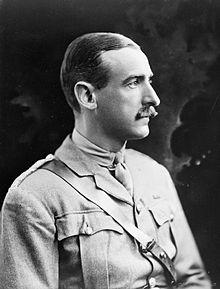
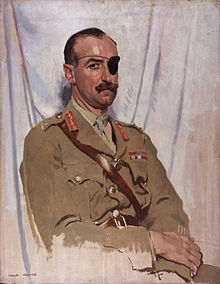
I was sent a link today from a friend who I consider as one such character. His name was Sir Adrian Paul Ghislain Carton de Wiart.
I have taken a few paragraphs from the full article about a life that was lived to the Max. His life reads like something out of a Boys Own Novel.
You may not agree with the life he led, but it is more a testament to the strength of character of a person and what is possible despite incredible odds.
You can read at:
http://en.wikipedia.org/wiki/Adrian_Carton_de_Wiart#World_War_II
Sir Adrian Paul Ghislain Carton de Wiart VC, KBE,CB, CMG, DSO (5 May 1880 – 5 June 1963), was an English officer of Belgianand Irish descent.
He fought in the Boer War, World War I, and World War II, was shot in the face, head, stomach, ankle, leg, hip and ear, survived a plane crash, tunnelled out of a POW camp, and bit off his own fingers when a doctor wouldn’t amputate them.
He later said “frankly I had enjoyed the war.”
The Oxford Dictionary of National Biography described him thus: “With his black eyepatch and empty sleeve, Carton de Wiart looked like an elegant pirate, and became a figure of legend.”
Carton de Wiart’s serious wound in the Boer War instilled in him a strong desire for physical fitness and he ran, jogged, walked, and played sports on a regular basis.
He was ‘a delightful character and must hold the world record for bad language.’
Victoria Cross
During World War I, Carton de Wiart who at the time was just 36 years old, received the Victoria Cross. (VC), the highest award for gallantry in combat that can be awarded to British Empire forces.
Carton de Wiart got it for ‘most conspicuous bravery, coolness and determination during severe operations of a prolonged nature. It was owing in a great measure to his dauntless courage and inspiring example that a serious reverse was averted. He displayed the utmost energy and courage in forcing our attack home. After three other battalion Commanders had become casualties, he controlled their commands, and ensured that the ground won was maintained at all costs. He frequently exposed himself in the organisation of positions and of supplies, passing unflinchingly through fire barrage of the most intense nature. His gallantry was inspiring to all.’
Prisoner of war
Carton de Wiart was a high profile prisoner.
Carton de Wiart made friends in the prison, especially with General Sir Richard O’Connor, Thomas Daniel Knox, 6th Earl of Ranfurly and Lieutenant-General Philip Neame VC.
The four were committed to escaping. He made five attempts including seven months tunnelling.
Once Carton de Wiart evaded capture for eight days disguised as an Italian peasant (which is surprising considering that he was in northern Italy, couldn’t speak Italian, and was 61 years old, with an eye patch, one empty sleeve and multiple injuries and scars).
Ranfurly described Carton de Wiart in captivity as “… a delightful character” and said he “…must hold the record for bad language.” Ranfurly was “…endlessly amused by him. He really is a nice person – superbly outspoken.”[
Retirement
Coming down stairs, he slipped on coconut matting, fell down, broke his back and several vertebrae, and knocked himself unconscious.
He eventually made it to England and into a hospital where he slowly recovered.
The doctors succeeded in extracting an incredible amount of shrapnel from his old wounds. He recovered and then went to Belgium to visit relatives.
Despite all his wounds in the war, Carton de Wiart said at the end:
“Frankly I had enjoyed the war…”.
He retired with his second wife who was 23 years his junior, in Ireland, taking up a life pursuing salmon and the snipe.
Carton de Wiart died at the age of 83 on 5 June 1963.
In his memoirs he wrote, “Governments may think and say as they like, but force cannot be eliminated, and sometimes it is the only real and unanswerable power.”
How ever things are going, its worth pausing for a moment to appreciate, that in most cases, at least you don’t have to bite your own fingers off!
 tonktraining.com