
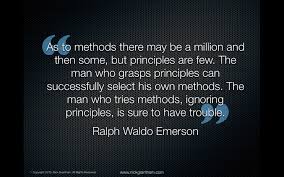
You may swear you want the body of a goddess, and you may have an amazing, time specific, all singing all dancing goal to get there, but if you keep finding yourself on a date in Starbucks drinking full fat hot chocolate whilst recovering from a hard night on the town you’ve probably skipped delving into WHY you want this outcome!
Funnily enough why you are in Starbucks on a date is probably the same reason you wanted the body of a goddess….but double choco mocho doo-da is instant gratification to your underlying needs and a sure winner, even though its detrimental to who you want to be long term.
So is there a solution and is it goal setting specifically?
Just recently it’s been interesting talking to several athletes regarding goal setting and what they put their success down to, the reason for failing in the past to accomplish their goals and what they consider to be the reason for their recent successes.
And the results have often been outstanding in short periods of time.
Results that had eluded them for 10 months, by simply altering their goals, they have accomplished what they had desired often in under 8 weeks!
And it’s clear that goal setting has a huge part to play in securing that success.
On the surface it looks just like that – Right goal, correct planning, time specific and being held accountable, all seem to be the formula for success.
The question that interest me, is how can someone who knows what to do regarding goal setting and are also experts in their field, fail in one instance to acquire results and yet achieve better results in half the time by simply changing a goal?
Is it simply a case of changing a goal and following the same methodologies that advocates success, or have we missed something very subtle, but fundamental that’s going on under the radar?
Let’s take a standard request – (especially with the New Year coming up.)
‘I want to get in shape’.
Ok cool. Now the goal protocol that most people follow goes like this.
First make it as specific as possible –
why do you want to lose weight? – And there are many reasons why this could be from going on holiday, health, attracting a partner, to get into a wedding outfit or to do a sporting event.
Then we are told to put a time frame on it, to set a specific value – so instead of the ambiguous ‘I want to lose some weight’ we should say ‘I want to lose six lbs in six weeks’ and then make smaller weekly goals to achieve that.
We then we are asked to think about why we really want to achieve it.
And this is perfect Goal setting protocol.
We now know, what we want, how to do it and why we say we want it.
So how comes this system work sometimes and fail in others?
Or is it just a case of keeping changing our goals until one sticks?
There’s several clues we need to look at.
One is, that when goals have been changed, results that have alluded the same person, have been achieved often as a bi product and in a fraction of the time with the new goal. The other clue is – The Formula – the way the goal is set up – is the same.
Simon Sinek, in his book ‘Start with Why’ devised an idea by looking at successful people and companies such as Apple and looked at why they had been successful in a market where others had failed even though they had a better product or solution to a problem.
And it turned out to be a simple principle and something Sinek calls, ‘The Golden Circle’.
Most people work from WHAT they want, HOW they can get it and lastly they skim lightly over WHY they want it at a surface level.
People who seemed to be excelling get very, very clear on WHY they want to achieve certain things. Then and only then do they create a strategy that works in reverse to conventional wisdom. They start with – WHY- HOW-WHAT.
I believe, when people say they changed their goal and this is what reaped success, have simply aligned themselves with what intrinsically drives them – usually by chance.
And it’s in that alignment that drives us to succeed.
If we believe in an idea, or align our values with what we want, then we set a very powerful driver in place.
And I don’t like to call that drive motivation. Motivation is subjective and only for the moment. People who succeed are inspired either to move towards or away from something.
It’s not always a positive force either. Many successful people are driven by a fear or failure or returning to a place in their past where things were not so rosy.
For many athletes, the sweet taste of success is often driven by an innate hate of failure that penetrates their sense of identity and their belief systems.
I think we fail goals long before we even start writing down the goal formula.
But success does not have to be a fluke.
You want to talk about accountability – there’s nothing stronger than an internal fear or desire. Telling your friends doesn’t usually keep you accountable – your values and sense of identity do.
I think we give credit to the method of goal setting when I think our success or failure really lies in the goal itself.
Once we are intrinsically and emotionally aligned with an outcome, how we get there – a goal plan – are simply just details, like a map or a car are for getting to a destination.
It does not mean it’s easy once these drivers are in place and aligned. Far from it.
Ironically people who are aligned to their goals work much harder. Or at least harder at getting to their destination. When we are not aligned, or there is conflict, we tend to expel most of our energy trying to avoid what we say we want.
If you have a strong enough reason WHY you need to get somewhere, one that resonates with who you are deep down, then we can endure pretty much any HOW to get there.
Also by understanding WHY intrinsically, we really want our ‘surface goal’, we can then ascertain whether this is the best way to get those needs met.
Because unless we do this fundamental part of the process and ascertain why we are attempting a particular action, we are at the mercy of any temptation that’s offers us an easy – often detrimental – solution to our intrinsic needs, which inevitably is why we fail to keep our goals.
There’s often a conflict that eludes most of us within our goals. We may want more money but still want to work part time, or we may want to get in shape but love socialising with our friends down the pub.
However, when we strip down the ‘Why’ of wanting our version of a ‘body of a goddess’ down to our human needs, it become blindingly obvious why we are not getting it and where the conflicts are!
By paying attention to this area we have a better chance of designing and sticking to our goals.
By looking at the things that distracted us and have made us fail in the past and at those goals that we were successful at we can begin to look at the WHY’s in those situations. This will give us clues to what motivates us and also why we fail.
Because even in failure we learn what motivates us – it’s just what motivates us away from discomfort. Once we know this, we can use the same emotional force but for success in all of our goals!
Find your WHY. WHY you do and WHY you don’t do things, WHY you fail and WHY you excel.
Start here and you’ll stand a far better chance of choosing the right goals for you!
 tonktraining.com